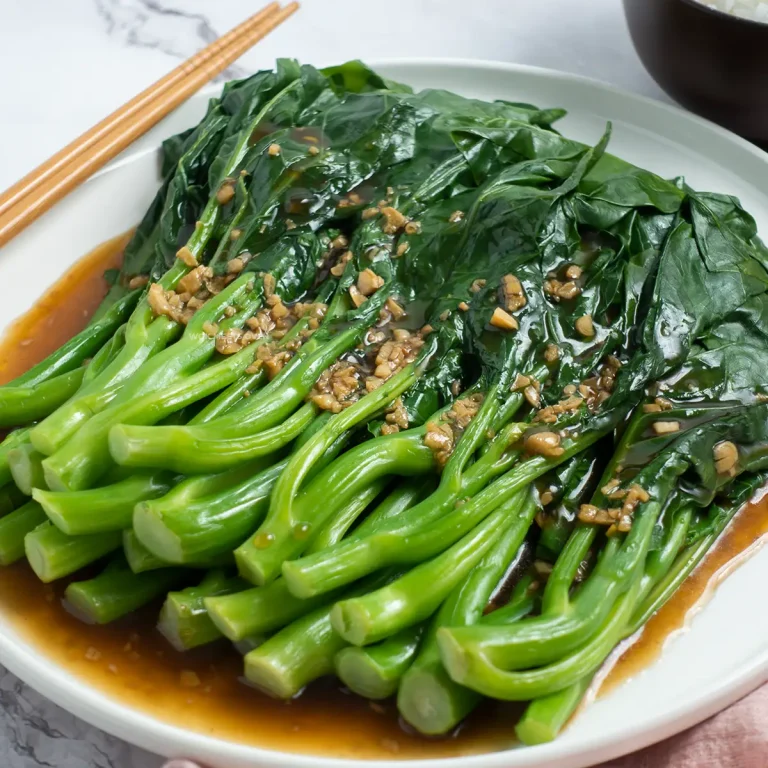
Ong Choy (Water Spinach) With Fermented Bean Curd
This Ong choy fermented bean curd stir-fry is an easy and simple Chinese homestyle dish that’s packed full of flavor. Fresh, crunchy Ong choy is stir-fried together with fermented bean curd to produce this savory dish that’s perfect for any occasion.
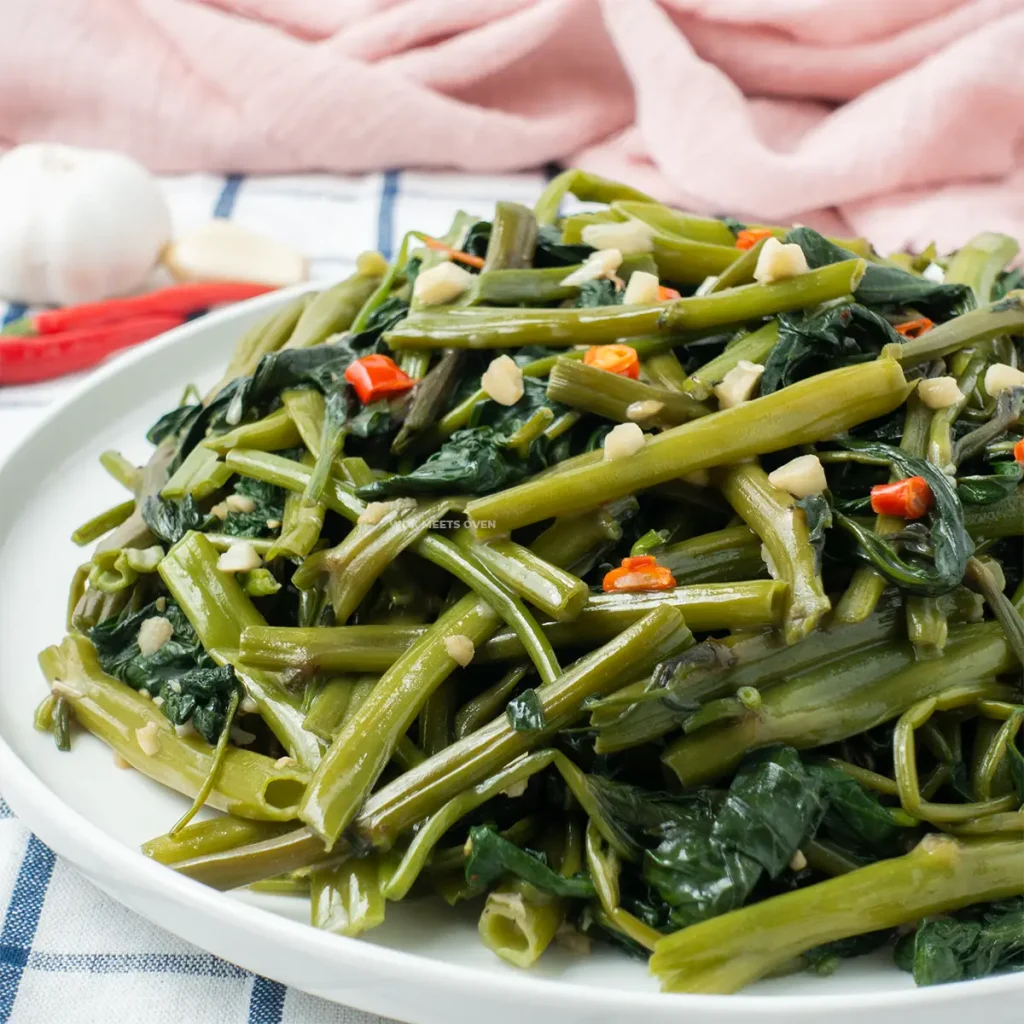
What Is Ong Choy (Water Spinach)?
Ong choy (蕹 菜), Ton choy/tung choi (通 菜), Water spinach or morning glory is a semi-aquatic plant grown in Asia, especially in Southeast Asia. The plant is grown in water or moist soil.
Water spinach is known for its long green leaves and it’s long hollow crunchy stems that produce an incredible crunch in dishes.
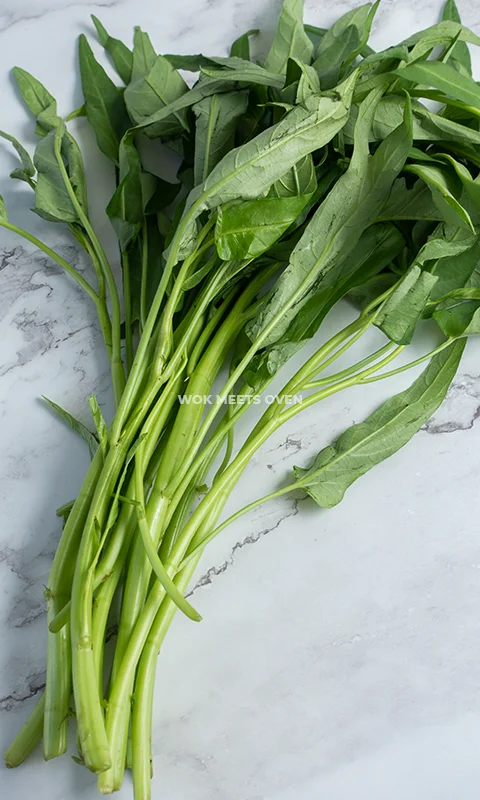
The vegetable is traditionally stir-fried as a side dish in a lot of Asian recipes, such as Vietnamese morning glory stir fry with garlic (rau muống xào tỏi), Chinese water spinach stir fry with fermented bean curd, and Thai-style morning glory stir fry.
Where to Buy Water Spinach
Water spinach is typically sold at Asian grocery stores. If you can’t find it, then it might be labeled something else, like Morning Glory, ong choy, tong choy, or tung choi.
How to Select Water Spinach/Morning Glory at the Supermarket?
When selecting water spinach, try to look for ones that don’t have any blemishes on the leaves and stems or any wilted leaves.
The leaves should be nice and vibrant or have a dark green tone to them. This indicates that the water spinach is still fresh.
Also, try pinching the stems and see if you hear a crunch. Fresh morning glory should be somewhat tender and produce a crunching sound when pinched.
What Is Ong Choy Fermented Bean Curd Stir Fry?
Ong choy fermented bean curd stir-fry (腐乳 炒 蕹 菜) is a popular Cantonese dish consisting of fresh Ong choy that is stir-fried together with bean curd. Since the Ong choy by itself is quite bland, fermented bean curd is added to the Ong choy to season it and give it a bit of umami flavor.
The results from the union of these two ingredients are a vegetable dish that is fresh, crunchy, and packed full of flavor, especially if the Ong choy with fermented bean curd is cooked right.
While growing up, my parents loved to make this dish as it was quick to make and tasty.
After a busy day from their day job, they could prepare dinner within 30 minutes, and everyone would have a full belly shortly afterwards.
Ingredient Notes
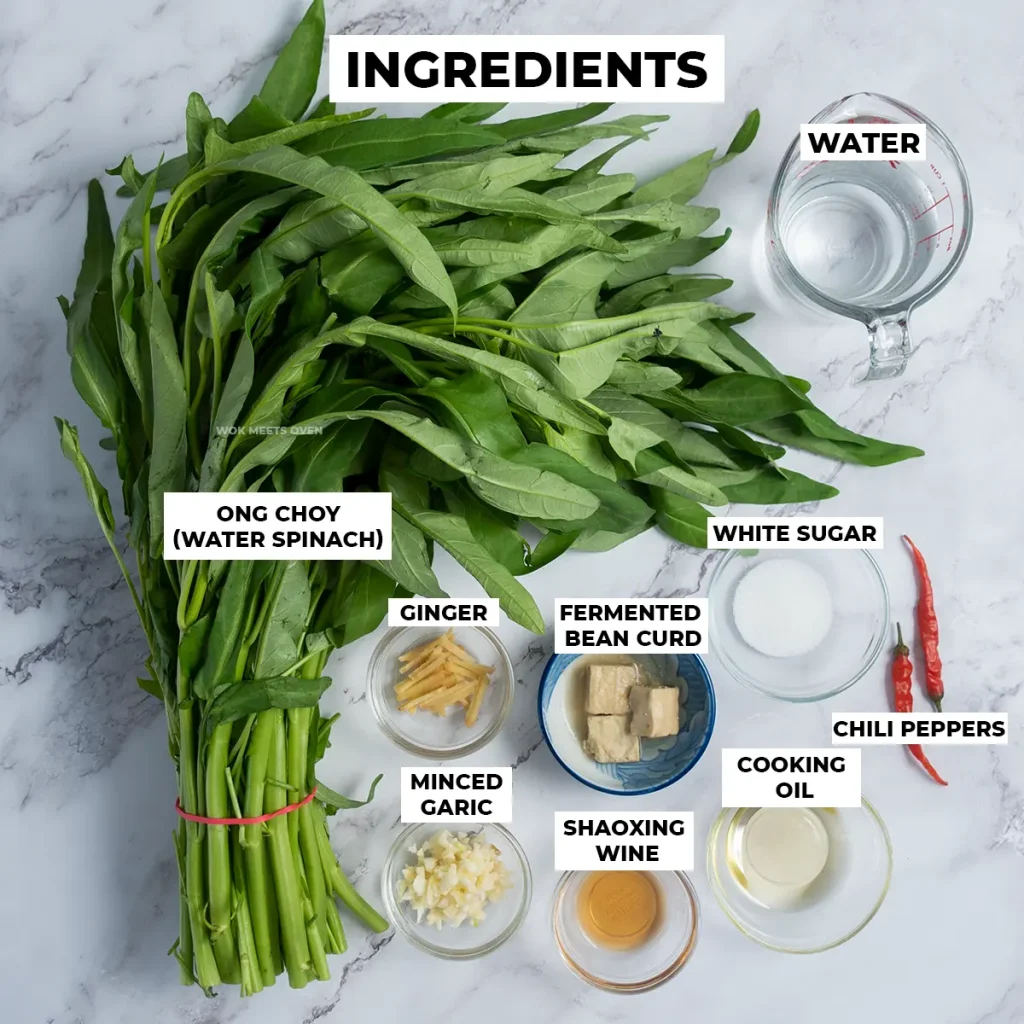
Water spinach (Ong choy/Ton choy): For this recipe, I used green water spinach. There is also a white type of water spinach, which you’ll see used a lot more in Chinese recipes. You can use either one for this recipe. When selecting water spinach, make sure to select ones without any blemishes.
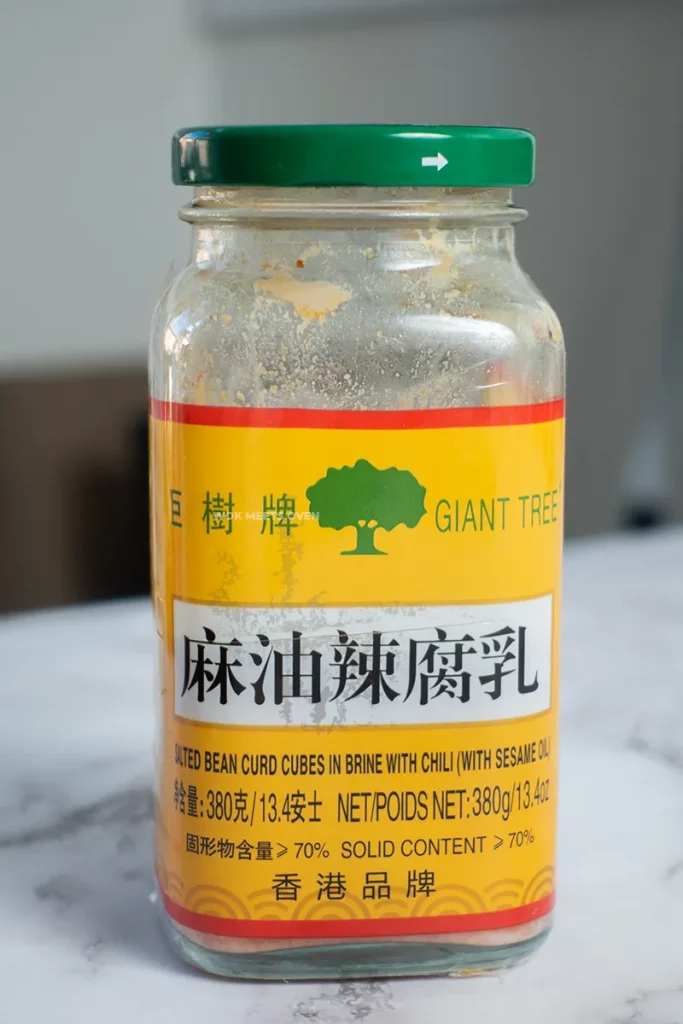
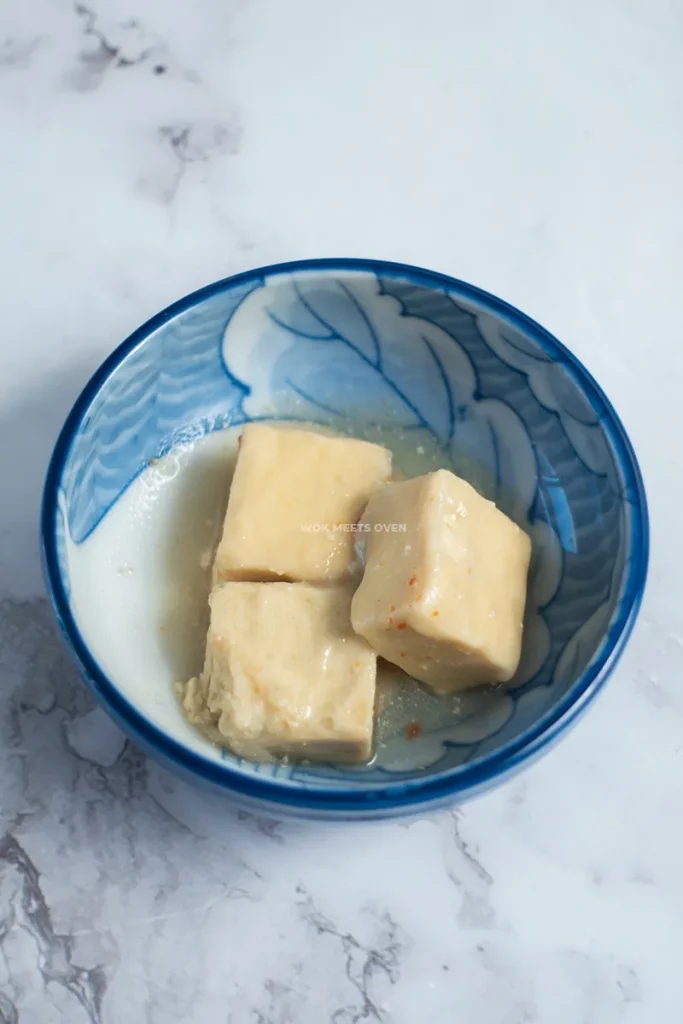
Fermented bean curd: This adds saltiness to the dish and will be our main seasoning agent. It has a somewhat pungent smell to it and a slight beany taste. Make sure to use the white fermented bean curds and not the red ones. They are different!
Substitutions
- White granulated sugar: You can substitute it with raw cane sugar or brown sugar.
- Shaoxing wine: You can substitute it with huadiao cooking wine. Don’t use Chinese rose cooking wine! It has a very strong flowery smell to it.
Directions
- Julienne your ginger, mince your garlic, and slice your chili peppers into small pieces and set them aside.
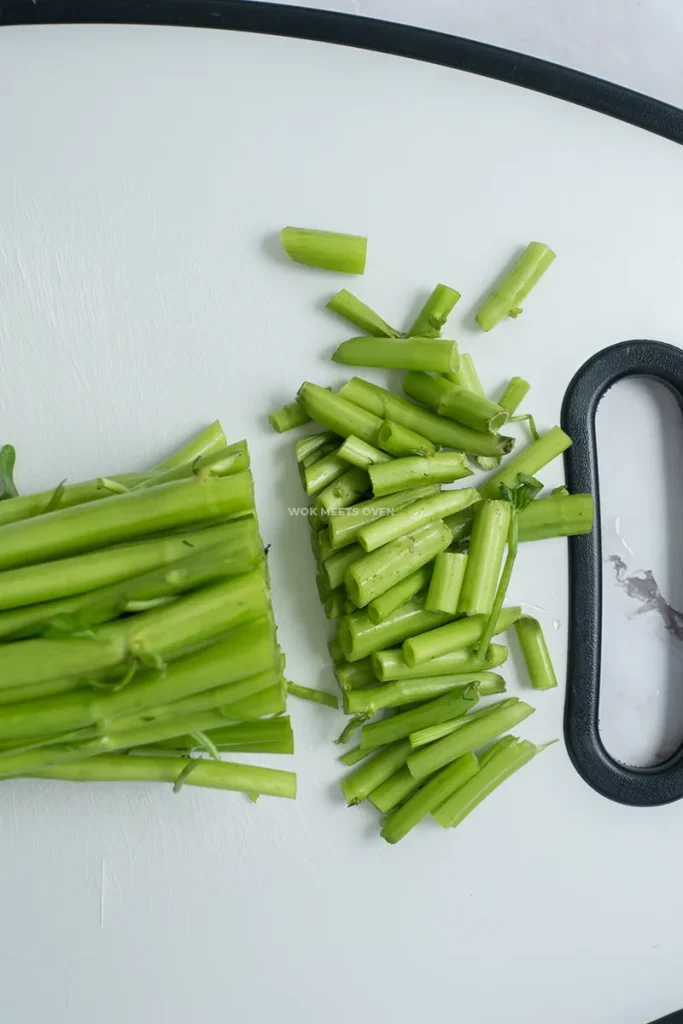
- Then, cut off the ends of the Ong choy stems.
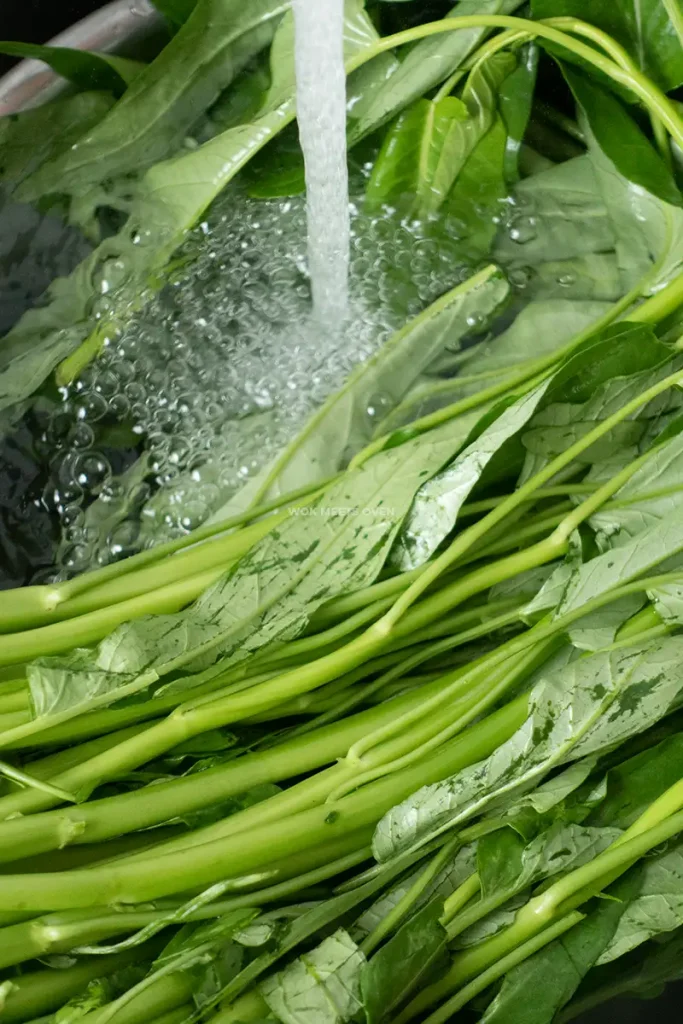
- Next, wash the Ong choy in cold water and then soak it in the water for about 15-20 minutes.
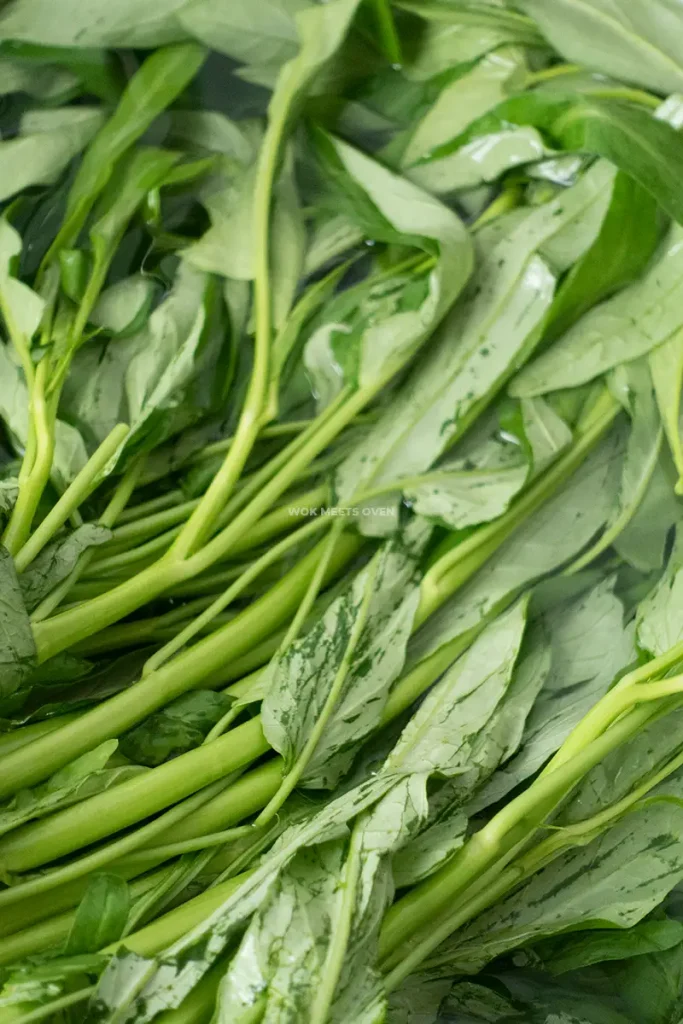
- Then cut the Ong choy into 3-4 sections. Likewise, you may choose to use your hands to snap the Ong choy.

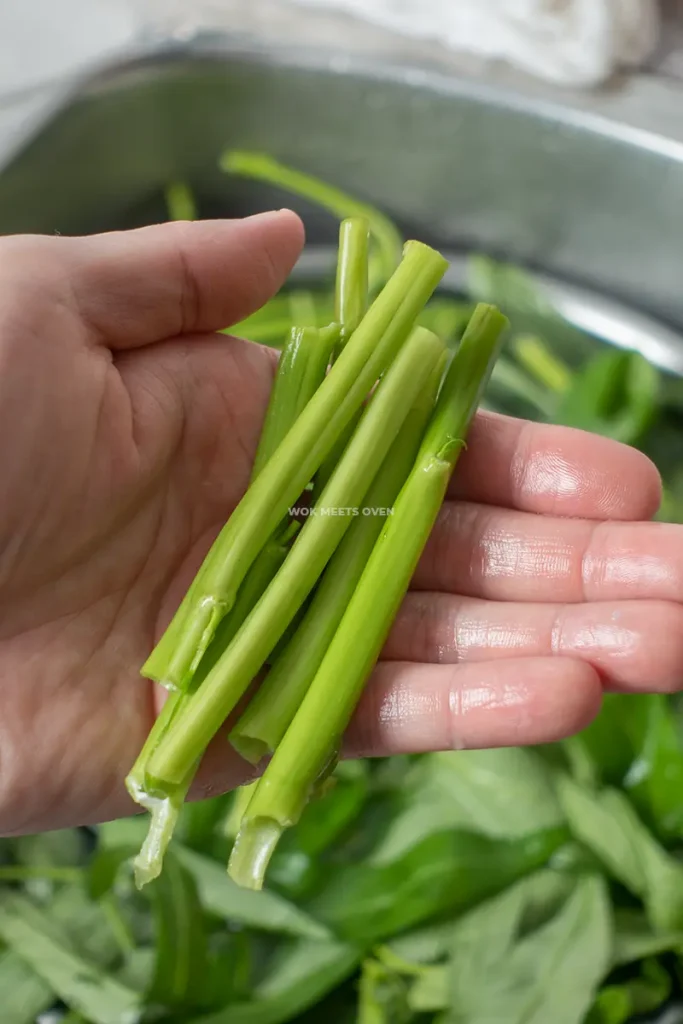
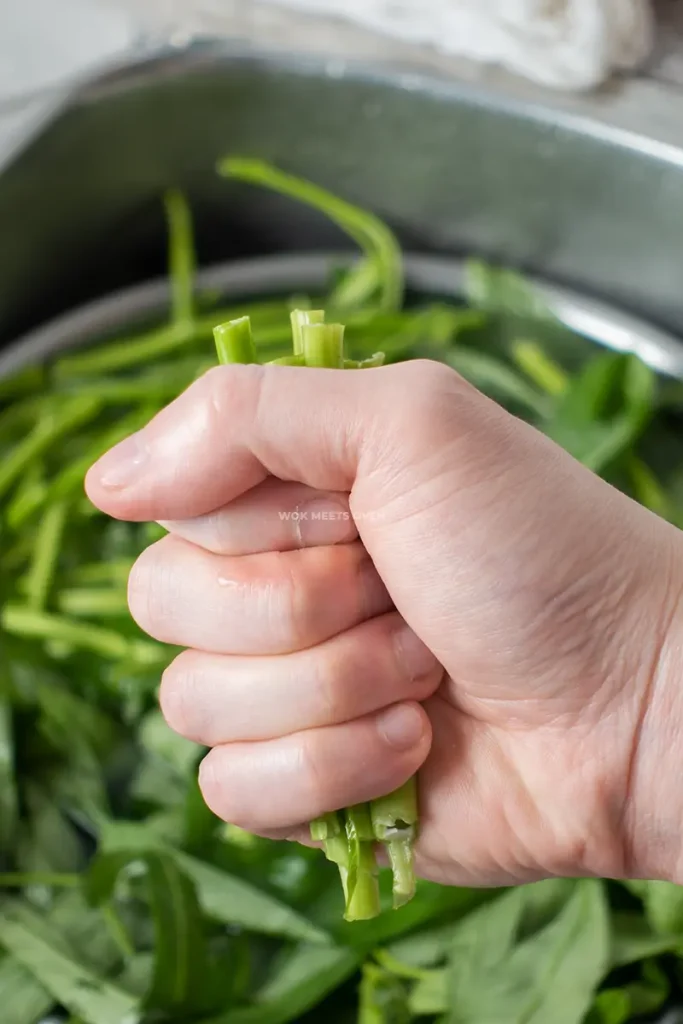
- Optional step: take the stems and hand-crush them. This will release excess water from the Ong choy.
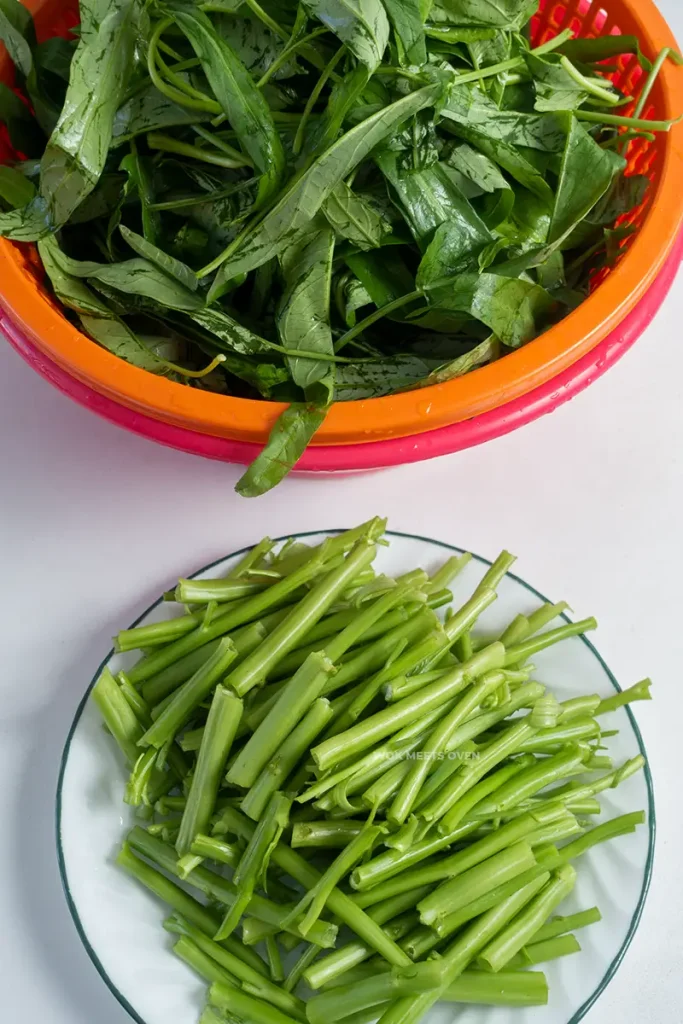
- Next, separate all of the stems and leaves from each other and let the Ong Choy rest in a colander bowl to drain out the water.
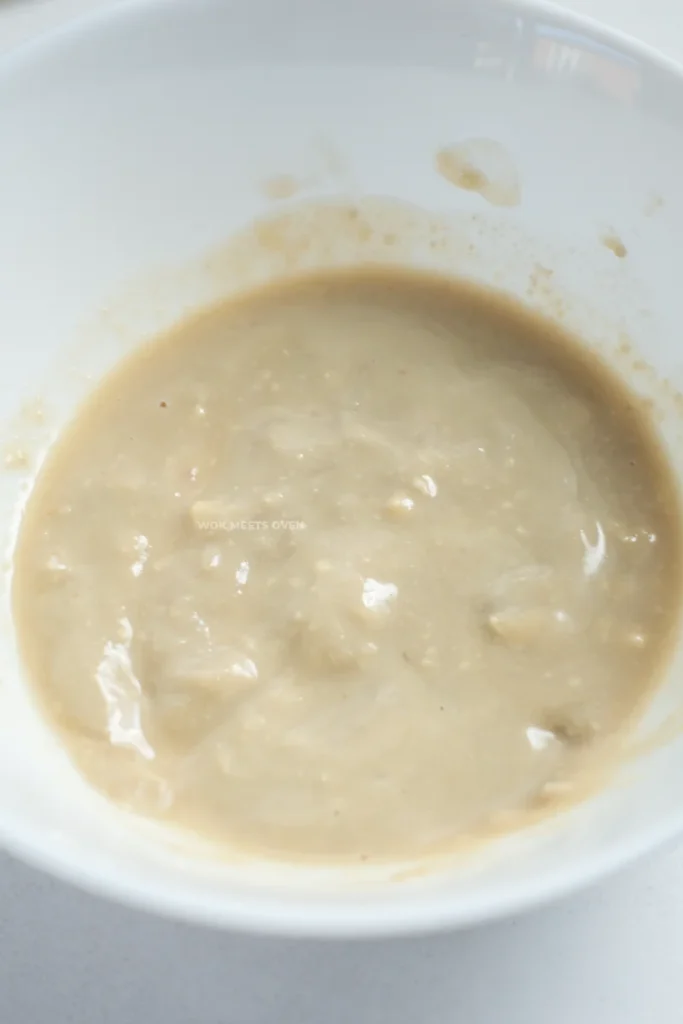
- While the Ong choy is resting and drying out, prepare the sauce by combining the bean curd with the Shaoxing wine and sugar. Mix everything well together and then set it aside.
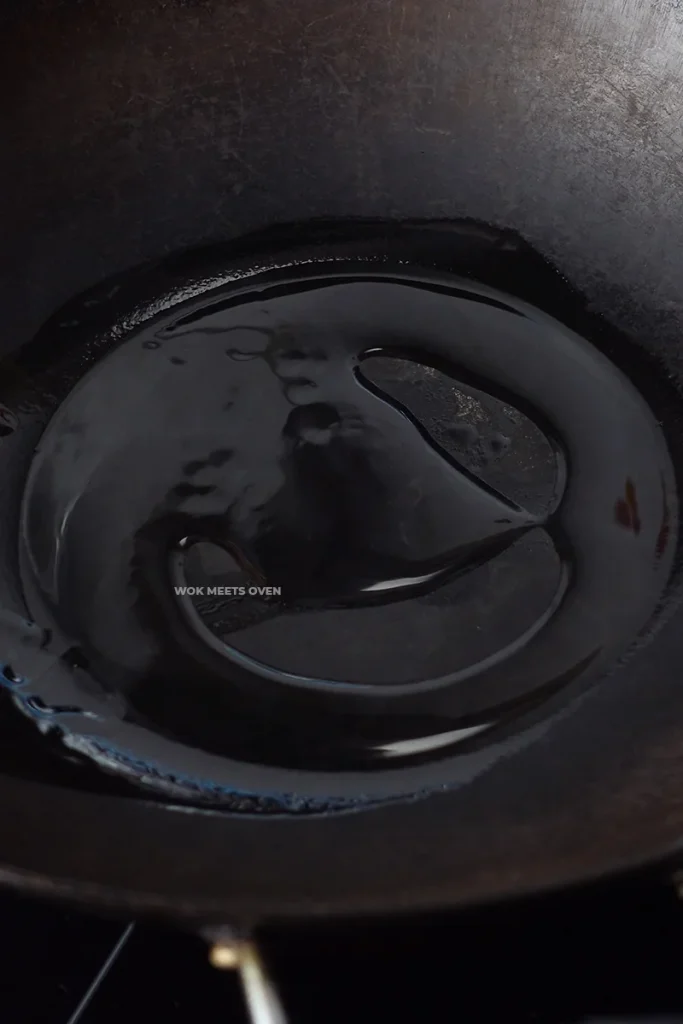
- Now, heat up a wok on high heat, and add about 1 tablespoon of cooking oil. Swirl the oil around the wok.
- If you don’t own a large wok, then I recommend splitting the cooking process into two. Just divide all of the ingredients in half and cook them twice to avoid overcrowding the wok.
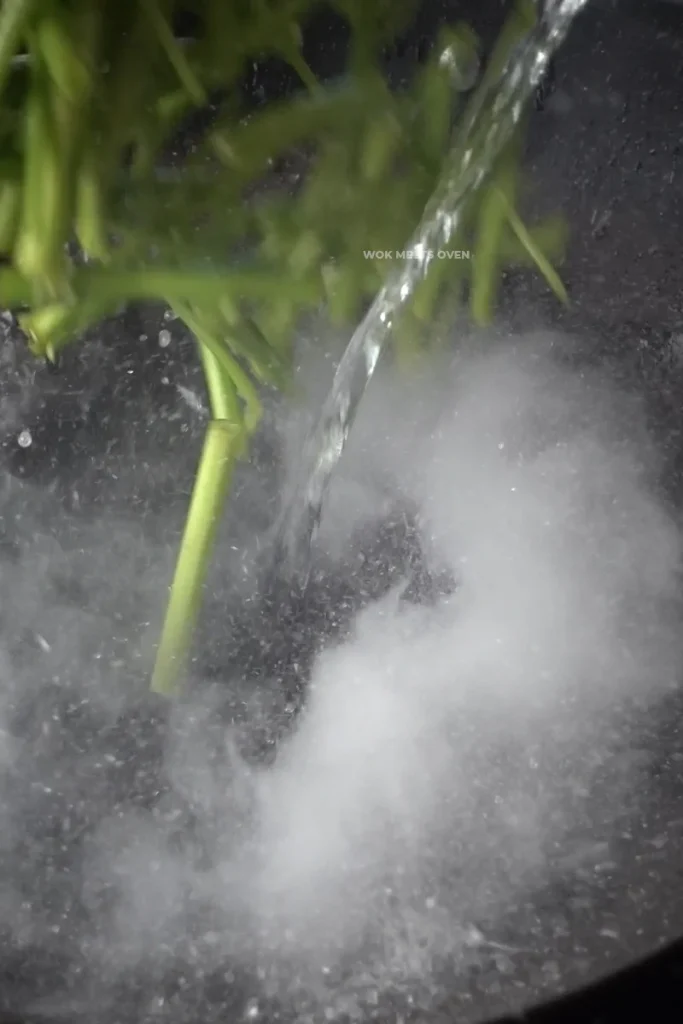
- Then prepare a 1/4 cup of water in one hand and the stems from the Ong choy in another hand. You will need to pour the water into the wok quickly, followed immediately by adding in the Ong choy stems. If you don’t do this quick enough, oil could splash out, so make sure that you add the Ong choy immediately after adding in the water to the wok. If you’re worried about the oil splashing out then I recommend wearing a long sleeve shirt and stepping back slightly away from the wok. This step helps shorten the cooking time while maintaining the crunch in the Ong choy stems.
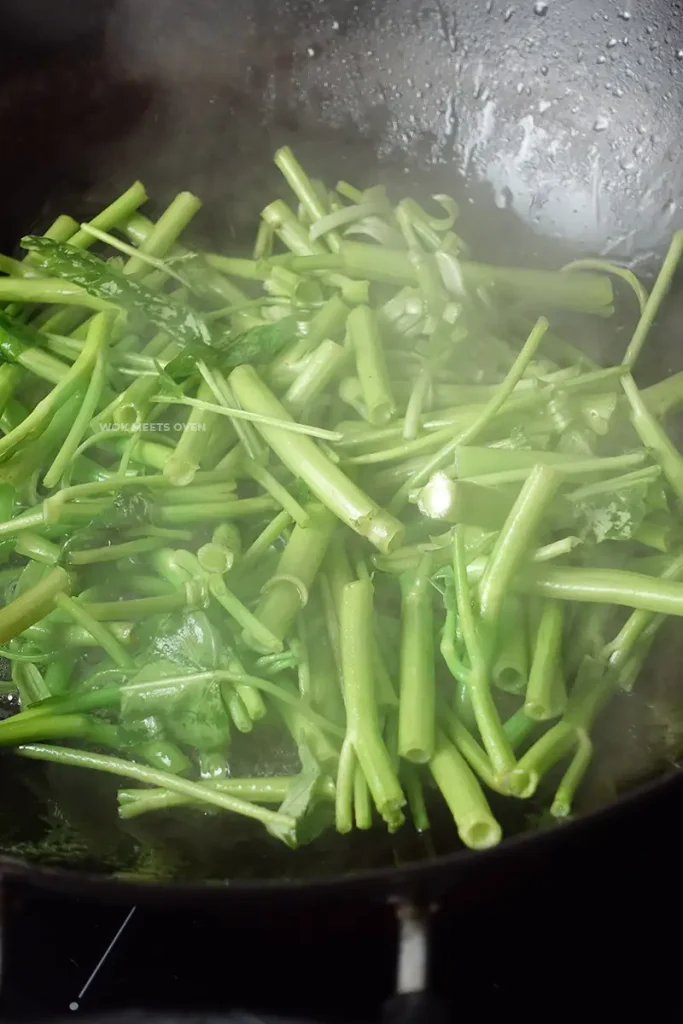
- Stir-fry the Ong choy for about 30 seconds and then add the leaves to the wok. Stir-fry everything for another 20-30 seconds and then remove the Ong choy from the wok. Do not overcook the Ong choy!
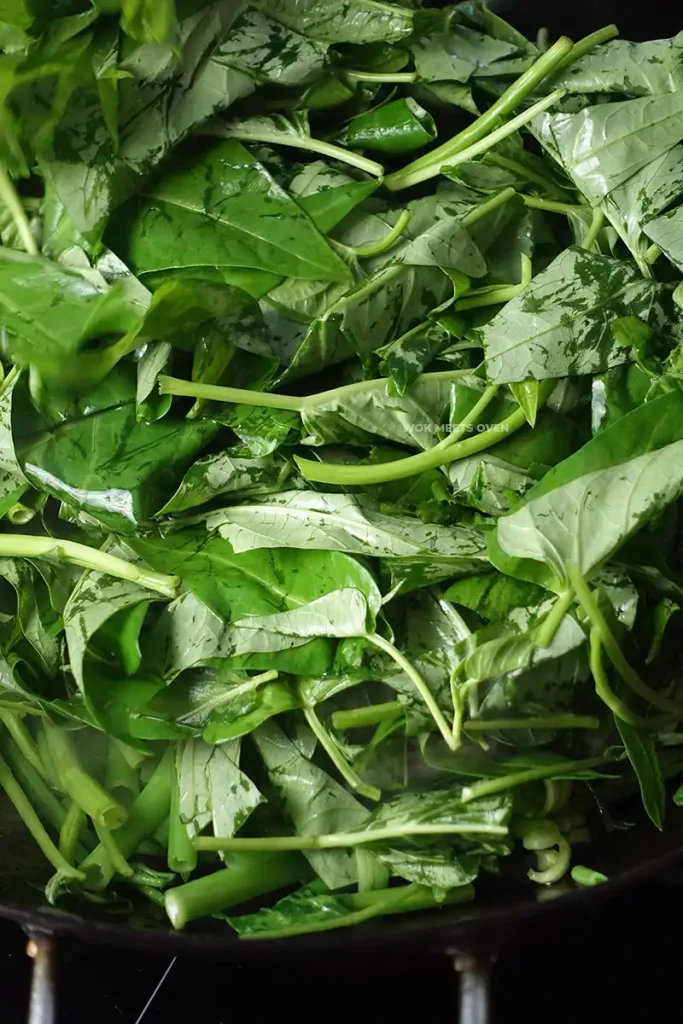
- Now drain out all of the water from the Ong choy. I recommend pressing down onto the Ong choy with a spatula to push out all of the water.
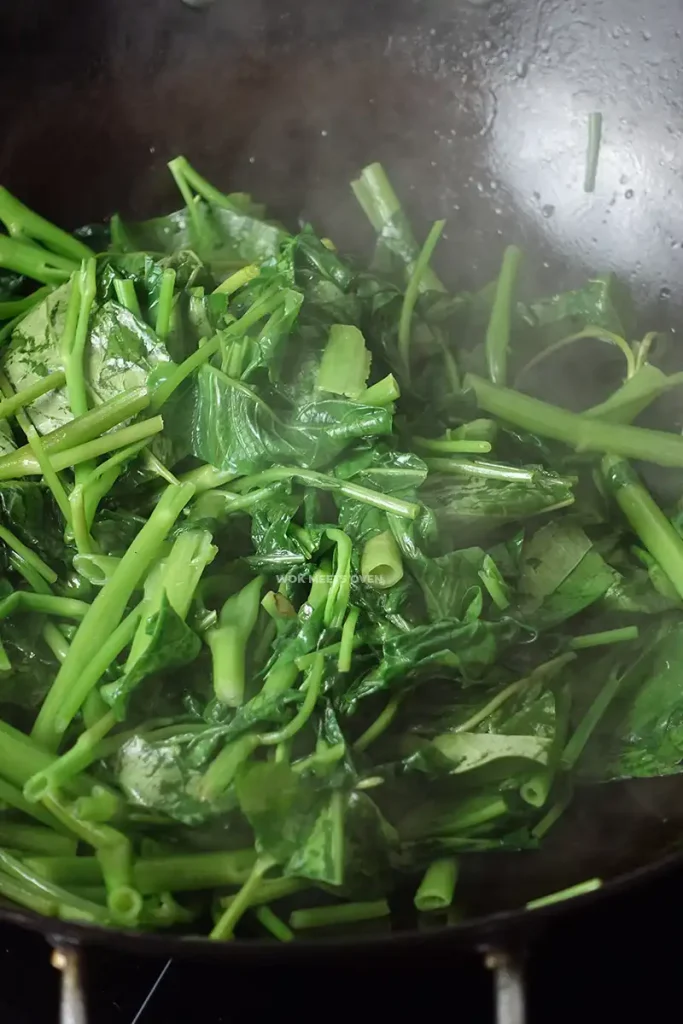
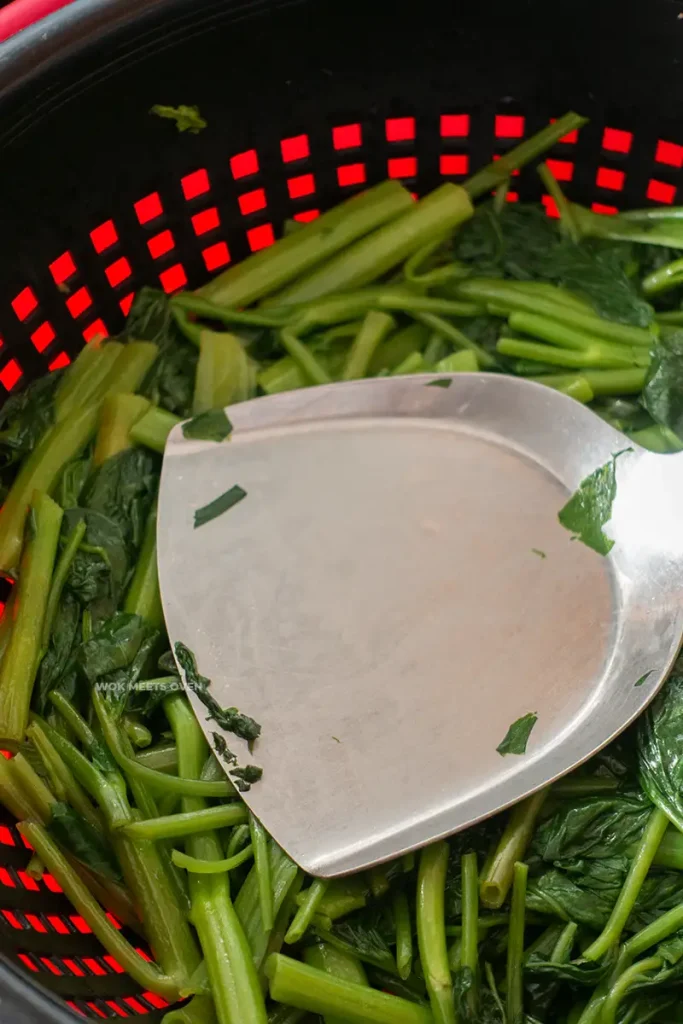
- Once done, set the Ong choy aside.
- Next, heat up a wok on medium-low heat and add 1 tablespoon of cooking oil.
- Add in your minced garlic, ginger, and chili peppers to the wok. Stir-fry everything for about 30 seconds and then add in your sauce.

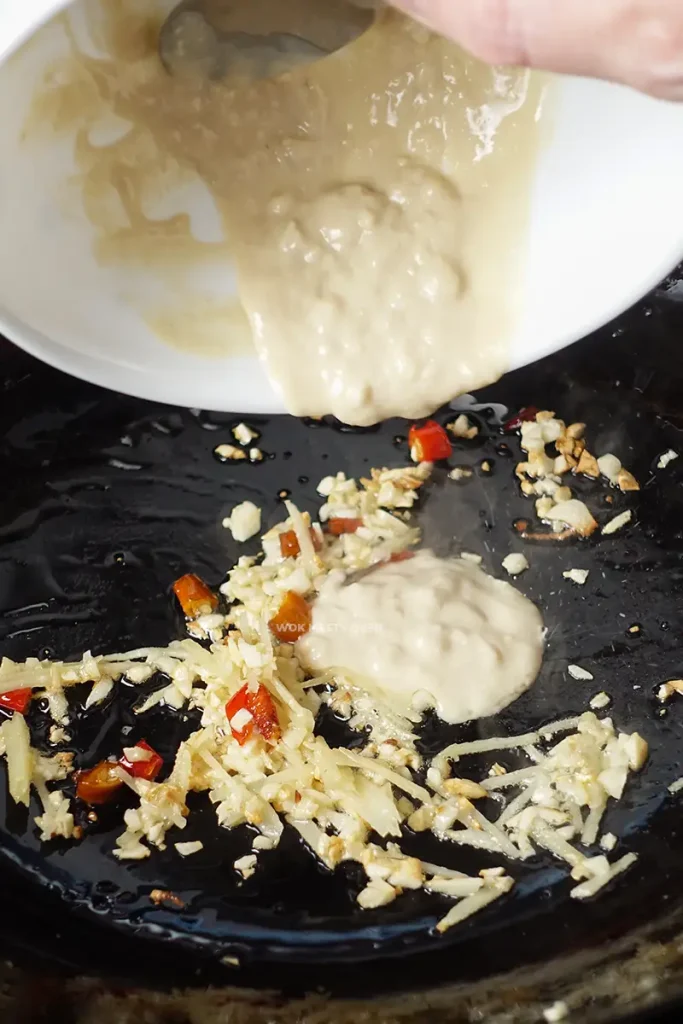
- Mix everything well together and stir-fry for another 10-20 seconds until you start to see the sauce bubble.
- Now, turn up the heat to high and add the water spinach.
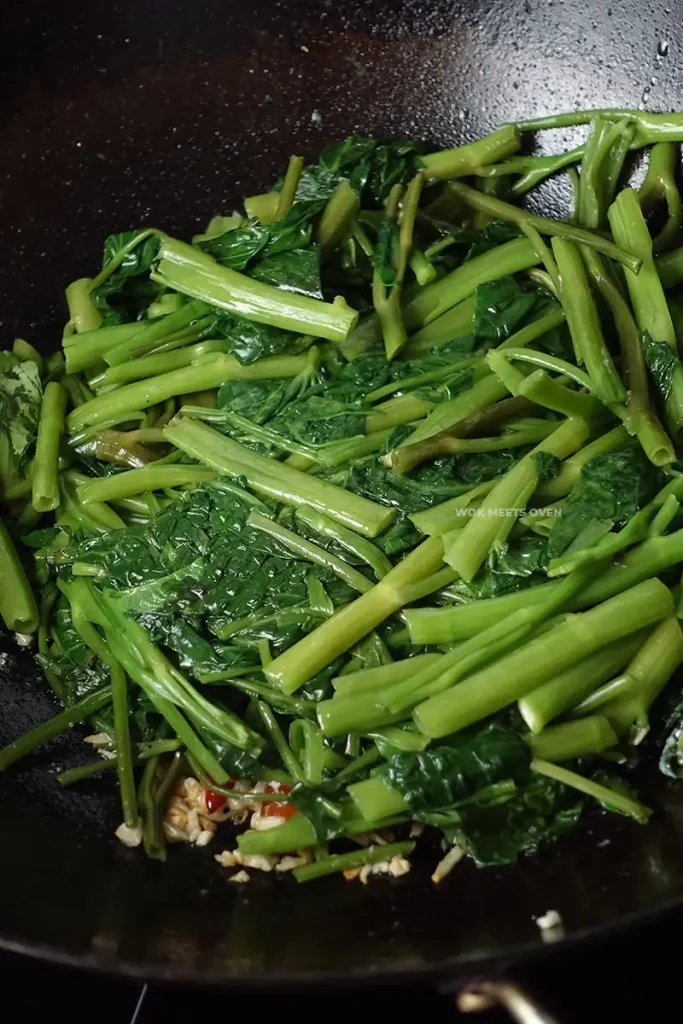
- Stir-fry everything together, making sure to mix the sauce well together with the Ong choy. Stir-fry it for about 30 seconds and then remove it from the wok.
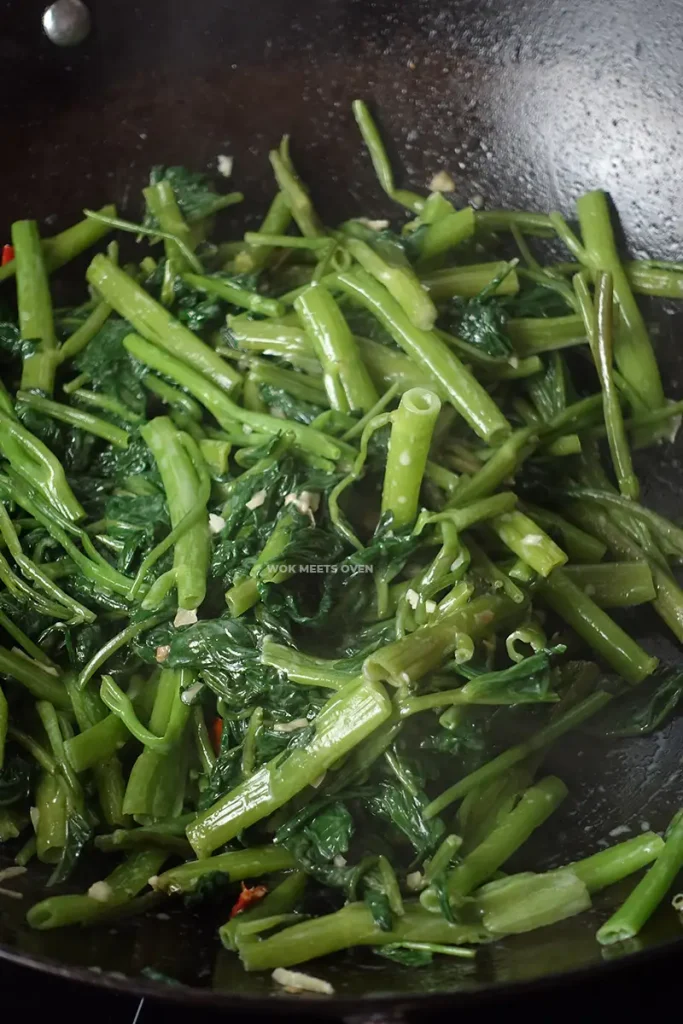
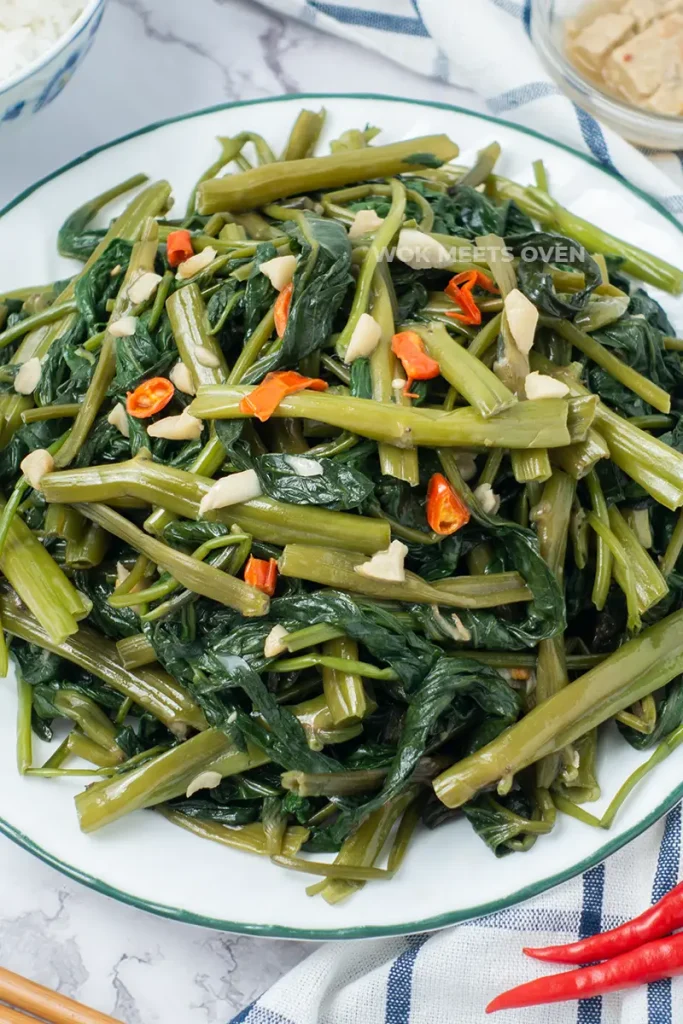
- The dish is ready to be served.

A Few Helpful Tips
Common Mistakes Beginners Make
- Using old ong choy: Old ong choy no long possesses the nice crunch and snap of fresh ong choy.
- Not cooking the ong choy on high heat: This causes excess water to leak out of the ong choy making your dish bland. There should be little to no water left in the wok after you remove the Ong choy from the wok. That’s how you know your wok was hot enough.
- Not draining out the water after stir-frying the ong choy: Since water was added to the wok the first time to stir-fry the ong choy, it should be drained out to prevent making your sauce taste bland.
- Cooking the ong-choy for too long: This causes water to leak out, making your dish taste bland.
Storage Tips
This stir-fried water spinach with fermented bean curd dish can be stored in an air-tight container for up to 5 days in the fridge.
Recipes That Go Well With This Dish
If you’re a fan of stir-fried water spinach recipes, then you might want to give my Vietnamese water spinach stir-fry with garlic recipe a try. This is a very popular Vietnamese dish and is just as easy as this dish.
You can also pair this dish with some other Chinese dishes as well, such as Hakka Style Chinese Stuffed Tofu With Minced Pork and Shrimp recipe or Chinese steamed eggs.
Also, don’t forget, this dish should ideally be paired with some cooked white rice.
Frequently Asked Questions (FAQs)
Why Is My Ong Choy Leaking Out a Lot of Water When Stir-Frying It?
You’re wok isn’t hot enough, causing water to leak out of the Ong choy when stir-frying it.
Turn up the heat!
Why Is My Dish Bland After I Finished Making It?
This is almost certainly caused by excess water leaking out or not draining the water from the Ong choy after cooking it the first time.
Make sure that you’re using high heat to cook the Ong choy and that there isn’t excess water leaking out when you’re cooking it with the sauce the second time.
Why Is My Ong Choy Not Crunchy?
Were you using old Ong choy?
Were you cooking the Ong choy for too long?
The Ong choy loses its crunch once it turns old. You can check and see if you’re Ong choy is still fresh by trying to snap a piece of the stem. If it’s overly soft, then your Ong choy should be tossed into the trash bin.
While stir-frying the Ong-choy, it should only be cooked until it is no longer raw and all of the sauce has been mixed in with the Ong choy.
Once you go past 1-1.5 minutes, you run the risk of overcooking the Ong choy.
Can I Substitute White Fermented Bean Curd With Red Fermented Bean Curd?
No.
Just use white fermented bean curds.
You can pin this image


Ong choy with fermented bean curd
Equipment
- 1 Wok
Ingredients
- 1.5 lbs Ong choy (Water Spinach) 680g
- 3-4 Cloves Garlic
- 4 Pieces Fermented White Bean Curd
- 1 Teaspoon Shaoxing Cooking wine
- 1/4 cup Water
- 1 Teaspoon White granulated sugar
- 10 grams Ginger Julienned
- 1-2 Pieces Thai chili peppers Optional
- 2 Tablespoons Cooking oil
Instructions
- Julienne your ginger, mince your garlic, and slice your chili peppers into small pieces and set them aside.
- Then, cut off the ends of the Ong choy stems.
- Next, wash the Ong choy in cold water and then soak it in the water for about 15-20 minutes.
- Then cut the Ong choy into 3-4 sections. Likewise, you may choose to use your hands to snap the Ong choy.
- Optional step: take the stems and hand-crush them. This will release excess water from the Ong choy.
- Next, separate all of the stems and leaves from each other and let the Ong Choy rest in a colander bowl to drain out the water.
- While the Ong choy is resting and drying out, prepare the sauce by combining the bean curd with the Shaoxing wine and sugar. Mix everything well together and then set it aside.
- Now, heat up a wok on high heat, and add about 1 tablespoon of cooking oil. Swirl the oil around the wok.
- If you don't own a large wok, then I recommend splitting the cooking process into two. Just divide all of the ingredients in half and cook them twice to avoid overcrowding the wok.
- Then prepare a 1/4 cup of water in one hand and the stems from the Ong choy in another hand. You will need to pour the water into the wok quickly, followed immediately by adding in the Ong choy stems. If you don't do this quick enough, oil could splash out, so make sure that you add the Ong choy immediately after adding in the water to the wok. If you're worried about the oil splashing out then I recommend wearing a long sleeve shirt and stepping back slightly away from the wok. This step helps shorten the cooking time while maintaining the crunch in the Ong choy stems.
- Stir-fry the Ong choy for about 30 seconds and then add the leaves to the wok. Stir-fry everything for another 20-30 seconds and then remove the Ong choy from the wok. Do not overcook the Ong choy!
- Now drain out all of the water from the Ong choy. I recommend pressing down onto the Ong choy with a spatula to push out all of the water.
- Once done, set the Ong choy aside.
- Next, heat up a wok on medium-low heat and add 1 tablespoon of cooking oil.
- Add in your minced garlic, ginger, and chili peppers to the wok. Stir-fry everything for about 30 seconds and then add in your sauce.
- Mix everything well together and stir-fry for another 10-20 seconds until you start to see the sauce bubble.
- Now, turn up the heat to high and add the water spinach.
- Stir-fry everything together, making sure to mix the sauce well together with the Ong choy. Stir-fry it for about 30 seconds and then remove it from the wok.
- The dish is ready to be served.