Crispy Vietnamese Sesame Balls with Mung Bean Filling (Bánh cam)
These Vietnamese fried sesame balls are crispy on the outside and chewy on the inside, and filled with a sweet mung bean paste filling. It’s perfect for celebrating the Lunar New Year or anytime you’re craving a crispy and chewy sweet snack!

What Are Fried Sesame Balls?
Fried sesame balls, also known as jian dui (煎堆) in Chinese or bánh cam in Vietnamese, are a popular Asian snack and dessert often eaten during holiday celebrations (Tết or Chinese New Year (CNY)) or at dim sum tables. They are also very popular at overseas Vietnamese bánh mì shops as well.
This Asian dessert is traditionally made using glutinous rice flour dough, sesame seeds, and stuffed with a filling inside, such as mung bean paste, red bean paste, peanuts, or lotus seed paste.
The sesame balls are deep-fried until puffy and golden brown in the shape of a round ball. The outer crust is crispy while the inside is chewy.
A perfect bánh cam sesame ball typically has a hollow center filled with a round filling, which you can hear hitting the walls of the fried sesame balls if you shake it. The texture of the Asian fried sesame balls is crispy and chewy, giving them a unique contrast in taste and texture.
One of the biggest challenges with making Chinese deep-fried sesame balls is frying. If the oil temperature isn’t hot enough, then your Chinese fried sesame dessert balls won’t rise and expand, but if the temperature is too hot, then they might burst, become hard too quickly, preventing the sesame balls from expanding and even brown too quickly.
Then there’s the issue of needing to press down onto the fried sesame balls to help them release the excess air inside the sesame balls so that it expands more.
Luckily, though, Vietnamese sesame balls aren’t nearly as complicated as their Chinese neighbour’s version, and in my Vietnamese fried sesame balls with mung bean filling recipe, I’ve simplified this process even further. There is no longer a need to press down on the sesame balls to release all that air during the expansion process. I’ve also included detailed instructions to show you what temperature to use and when to adjust it so that you’ll have perfect Vietnamese New Year fried sesame balls every time (or Chinese if that’s what you want to call it 😂 (not really much difference between the two)).
Sound good?
Let’s now discuss some of the key ingredients.
Ingredient Notes
Glutinous rice flour: You can easily pick this up at most Asian grocery stores. The glutinous rice flour makes our fried sesame balls extra chewy and stretchy, and helps us hold the dough together.
Rice flour: Again, this can be easily found at most Asian grocery stores. The rice flour helps balance out the chewiness and makes our fried sesame balls light and crispy.
Potato: You can use any kind of potato that you’d like for this recipe.
White sesame seeds: I recommend using raw white sesame seeds since we’re going to fry the sesame balls. If you’re using roasted sesame seeds, they might become burnt.
Split mung beans: Use split mung beans for this recipe instead of whole mung beans. They will cook faster, mash easily, and will have a nice golden yellow color.

Substitutions
- Split mung beans: you can use regular mung beans if you really can’t get split mung bean, although it will require a lot more prep and an increase in cooking time to get the mung beans down to a soft, mushy consistency. In addition, fried sesame balls also come filled with a variety of different fillings such as red bean, lotus paste, and peanut filling. If you’re interested in learning how to make lotus paste, then I have a recipe right here for that.
- White sesame seeds: Typically, fried sesame balls use white sesame seeds as the topping to cover the Vietnamese sesame balls, but you can substitute white sesame seeds with black sesame seeds if you’d like. It might taste a little different, though.
- Potato: You can substitute it with sweet potato.
How to Make Vietnamese Sesame Balls With Mung Bean Filling
Making the filling:
- Soak the mung beans in cold water for at least 4 hours prior to use.

- Wash and rinse the mung beans and then add them to a pot.
- Add in water and table salt and give it a quick mix.

- Next, cook the mung beans on medium heat until there is about 15-20% water left or the water is just slightly above the mung beans.

- Then reduce the heat to low or medium-low heat, cover the pot with a slight opening, and cook for another 10-15 minutes until the mung beans are soft, while occasionally stirring the pot to prevent the mung beans from sticking to the bottom of the pot. The total cooking time should take around 15-20 minutes.

- You can check whether or not the mung beans are soft enough by scooping up some and gently pressing down onto the mung beans. They should easily mash apart.
- Once done, transfer the mung bean to a wok and cook it on medium heat.
- Add in your cooking oil, sugar and vanilla extract to the mung beans and mix everything well together.

- While the mung beans are cooking in the wok, prepare your glutinous rice flour slurry by combining 1 teaspoon of glutinous rice flour with 2 teaspoons of water. Make sure to mix everything well together and then set it aside.
- Once all of the sugar has melted, add in the glutinous rice flour slurry to the mung beans and mix well together.

- When the mung beans start to thicken up, reduce the heat to medium-low and continue cooking until the mung bean has solidified and no longer sticks to your spatula.

- Transfer it to a bowl, let it cool down for a few minutes while keeping it covered to prevent it from drying out, and then divide it into 10 pieces.

- Cover the 10 pieces with some plastic wrap or a towel and put them in the freezer for 30 minutes to 1 hour. Then transfer to the fridge for later use.
Making the dough:
- Start off by removing all of the skin from the potato. Then chop the potato into smaller pieces to make it steam faster.
- Now steam the potato until fork tender.
- Once done, Mash the potatoes and set aside.
- Next, heat up a pot of water with sugar until all of the sugar has melted and it’s almost boiling.
- Add the sugar water to the potato and mix well.

- Now, in a large bowl, add in your sieved glutinous rice flour, rice flour, baking powder, vanilla extract, and cooking oil.

- Give it a light mix then add in the potato and sugar liquid into the bowl.

- Mix everything well together using some chopsticks or a spatula.
- Knead the dough until smooth using your hands now (roughly around 2-3 mins).

- Now cover the dough and let it rest for 30 minutes.
- Then divide the dough into 10 pieces. You can use a kitchen scale to weigh out the dough to get even measurements.
- Roll the 10 pieces of dough into a round ball and cover the pieces with a cloth or plastic wrap.

Making the sesame balls:
- Now grab one piece and make a hole in the middle. Then place 1 piece of the filling inside.


- Using your thumb and index finger, hold the filling in the middle and then flip the dough and filling over so that the dough is on top.
- Next, using your opposite hand, slowly grab the dough and pull it towards the center while rotating the dough and filling with your opposite hand.

- Finally flip the dough over again and then seal the top of the dough by pinching the sides together.


- Roll out the dough until it turns into a round ball, making sure that all of the filling has been sealed inside of the dough.

- Repeat for the rest of the pieces and cover them with a cloth or plastic wrap.
- Next, grab one piece of the dough and either dip it into water or lightly rub some water onto it.


- Then dip the ball into some sesame seeds and roll the ball around in the sesame seeds, making sure to fully cover the ball in sesame seeds.

- Now, pick up the ball and lightly pack the sesame seeds into the ball. This step will help prevent the sesame seeds from falling out when frying. Repeat for the rest of the balls.


- Next, heat up a pot with oil until it reaches between 130-135°C on medium-low heat. If you don’t own a thermometer, then you can use a pair of chopsticks. Just dip them into the oil and look for a slight sizzle coming out from the chopsticks. This will give you an idea of when the oil temperature is ready. Also, make sure there is enough oil to fully submerge the sesame balls.

- Add the sesame balls in but don’t crowd the pot! I suggest only frying half of the balls at once.

- After adding in the sesame balls, lightly move the balls around in the pot to prevent the balls from sticking to the bottom of the pot.
- In a few minutes, the sesame balls will start to float to the top. Gently press the balls back down into the oil using a spider strainer or some chopsticks.

- Continue doing this while slowly increasing the frying temperature in steps. So, for example, from 135-140°C, then 140-150°C. Don’t go past 155°C!
- Make sure to use a strainer to roll around the sesame balls in a circular motion constantly. This will help them fry more evenly and round up the shape.

- As you continue to fry the balls and submerge them into the hot oil, they will start to expand.
- Let the sesame balls fry around 150-155°C for around 7-8 minutes
- Once the sesame balls have done expanding in the hot oil, it’s time to brown them and harden the outer crust.
- Increase the temperature to medium heat and bring the temperature to between 160-170°C.
- Fry the sesame balls for around 1-2 minutes or until they turn golden brown and there are no soft spots on the outer skin.

- Finally remove the fried sesame balls from the hot oil. Let them rest for a few minutes and then serve while still hot.


A Few Helpful Tips
Common Mistakes Beginners Make
- Trying to convert measurements into cups (US customary). Please don’t try to convert the measurements. You need a kitchen scale!
- Pressing down too hard on the fried sesame balls. This causes them to crack and leak out the filling.
- Not covering your dough with a damp cloth or plastic wrap. This causes the dough to become dry and will crack and leak out the filling when frying.
- Using dough that is dry to fry your sesame balls. This is almost guaranteed to cause your Asian fried sesame balls to crack and leak out.
- Using too low of a temperature to fry your sesame balls. The balls will not expand out if the temperature is too low and will soak up all of the oil 🤮
- Using too high of a temperature to fry your sesame balls. This causes the sesame ball shells to become hard and crispy too quick, not allowing the insides enough time to expand.
- A lot of sesame seeds fall off of the fried sesame balls when frying: This is caused by not packing in the sesame seeds tight enough into the dough when your adding the sesame seeds to the dough balls.
- Not frying the sesame balls long enough at a high enough temperature: This causes the sesame balls to shrink as soon as you take them out of the hot oil, as the outer crust has not had enough time to harden yet. If this happens, immediately place the sesame balls back into the hot oil and turn up the temperature slightly, and fry the sesame balls for a few more minutes.
Storage Tips
These fried sesame balls are best consumed soon after frying them for the best taste. However if you still have any leftovers then you can store them in an airtight container in the fridge for up to 3 days.
How to Reheat the Fried Sesame Balls
You can air fry or bake the fried sesame balls at 325-350°F(165-180°C) for about 8-10 minutes or until they become golden brown and crispy.
Other Similar Recipes
If you enjoy these Asian snacks, then you might also like Hong Kong-style egg tarts, Chinese fried milk, and Chinese peanut cookies.
Frequently Asked Questions (FAQs)
Why Do My Fried Sesame Balls Shrink After Removing Them From the Hot Oil?
The outer layer of your fried sesame balls wasn’t fried long enough and didn’t have enough time to set yet. When the internal pressure drops due to the steam and hot air cooling down, it causes the fried sesame balls to shrink and collapse inwards.
Why Are My Fried Sesame Balls Cracking and Leaking Out the Filling When Frying?
This can be caused by a number of different reasons such as:
- Your dough is too dry
- You didn’t seal the sesame balls properly
- Your pressing too hard onto the sesame balls when frying
- Your oil temperature is too high when initially frying the sesame balls
I’m Allergic to Sesame Seeds. What Can I Substitute It With?
Just leave it out and fry the dough balls without any sesame seeds. They still taste great!
Can I Make These Fried Sesame Balls Without Any Filling Inside?
Yes, of course!
Why Are My Sesame Seeds Coming off the Dough When I Fry Them?
Your dough balls are not wet enough when you add them into the sesame seeds. Either dip the dough balls into some water before adding them to your sesame seeds or rub some water onto the dough balls first. Also you should use your hand and pack the sesame seeds into the dough balls as well.
Can I Air-Fry These Sesame Balls Instead of Frying Them?
No idea, but most likely not as you need to constantly monitor the sesame balls and ensure even cooking.
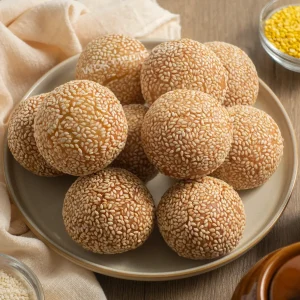
Crispy Vietnamese Sesame Balls with Mung Bean Filling (Bánh cam)
Equipment
- 1 Sauce pan
- 1 Non-stick frying pan
- 1 Pot For frying
Ingredients
Dough
- 125 g Glutinous rice flour
- 15 g Rice flour
- 85 g Potatoes
- 100 ml Water
- 65 g White sugar
- 1/2 teaspoon Baking powder
- 1 teaspoon Vanilla extract
- 2 teaspoons Cooking oil Vegetable, canola, corn, peanut
Mung Bean Filling
- 70 g Split mung beans
- 240 ml Water 1 cup
- 40 g White sugar
- 1/4 teaspoon Table salt
- 1/2 Tablespoon Cooking oil Vegetable, canola, corn, peanut
- 1 teaspoon Vanilla extract
Glutinous Rice Flour Slurry
- 1 teaspoon Glutinous rice flour
- 2 teaspoons Water
Sesame seeds for coating the dough
- 2-3 Cups White sesame seeds For coating the dough
Instructions
Making the filling
- Soak the mung beans in cold water for at least 4 hours prior to use.
- Wash and rinse the mung beans, and then add them to a pot.
- Add in water and table salt and give it a quick mix.
- Next, cook the mung beans on medium heat until there is about 15-20% water left or the water is just slightly above the mung beans.
- Then reduce the heat to low or medium-low heat, cover the pot with a slight opening, and cook for another 10-15 minutes until the mung beans are soft, while occasionally stirring the pot to prevent the mung beans from sticking to the bottom of the pot. The total cooking time should take around 15-20 minutes.
- You can check whether or not the mung beans are soft enough by scooping up some and gently pressing down onto the mung beans. They should easily mash apart.
- Once done, transfer the mung beans to a wok and cook them on medium heat.
- Add in your cooking oil, sugar, and vanilla extract to the mung beans and mix everything well together.
- While the mung beans are cooking in the wok, prepare your glutinous rice flour slurry by combining 1 teaspoon of glutinous rice flour with 2 teaspoons of water. Make sure to mix everything well together and then set it aside.
- Once all of the sugar has melted, add in the glutinous rice flour slurry to the mung beans and mix well together.
- When the mung beans start to thicken up, reduce the heat to medium-low and continue cooking until the mung bean has solidified and no longer sticks to your spatula.
- Transfer it to a bowl, let it cool down for a few minutes while keeping it covered to prevent it from drying out, and then divide it into 10 pieces.
- Cover the 10 pieces with some plastic wrap or a towel and put them in the freezer for 30 minutes to 1 hour. Then transfer to the fridge for later use.
Making the dough
- Start off by removing all of the skin from the potato. Then chop the potato into smaller pieces to make it steam faster.
- Now steam the potato until fork-tender.
- Once done, mash the potatoes and set aside.
- Next, heat up a pot of water with sugar until all of the sugar has melted and it’s almost boiling.
- Add the sugar water to the potato and mix well.
- Now, in a large bowl, add in your sieved glutinous rice flour, rice flour, baking powder, vanilla extract, and cooking oil.
- Give it a light mix, then add the potato and sugar liquid into the bowl.
- Mix everything well together using some chopsticks or a spatula.
- Knead the dough until smooth using your hands now (roughly around 2-3 mins).
- Now cover the dough and let it rest for 30 minutes.
- Then divide the dough into 10 pieces. You can use a kitchen scale to weigh out the dough to get even measurements.
- Roll the 10 pieces of dough into a round ball and cover the pieces with a cloth or plastic wrap.
Making the sesame balls
- Now grab one piece and make a hole in the middle. Then place 1 piece of the filling inside.
- Using your thumb and index finger, hold the filling in the middle and then flip the dough and filling over so that the dough is on top.
- Next, using your opposite hand, slowly grab the dough and pull it towards the center while rotating the dough and filling with your opposite hand.
- Finally, flip the dough over again and then seal the top of the dough by pinching the sides together.
- Roll out the dough until it turns into a round ball, making sure that all of the filling has been sealed inside the dough.
- Repeat for the rest of the pieces and cover them with a cloth or plastic wrap.
- Next, grab one piece of the dough and either dip it into water or lightly rub some water onto it.
- Then dip the ball into some sesame seeds and roll the ball around in the sesame seeds, making sure to fully cover the ball in sesame seeds.
- Now, pick up the ball and lightly pack the sesame seeds into the ball. This step will help prevent the sesame seeds from falling out when frying. Repeat for the rest of the balls.
- Next, heat up a pot with oil until it reaches between 130-135°C on medium-low heat. If you don’t own a thermometer, then you can use a pair of chopsticks. Just dip them into the oil and look for a slight sizzle coming out from the chopsticks. This will give you an idea of when the oil temperature is ready. Also, make sure there is enough oil to fully submerge the sesame balls.
- Add the sesame balls in, but don’t crowd the pot! I suggest only frying half of the balls at once.
- After adding in the sesame balls, lightly move the balls around in the pot to prevent the balls from sticking to the bottom of the pot.
- In a few minutes, the sesame balls will start to float to the top. Gently press the balls back down into the oil using a spider strainer or some chopsticks.
- Continue doing this while slowly increasing the frying temperature in steps. So, for example, from 135-140°C, then 140-150°C. Don’t go past 155°C!
- Make sure to use a strainer to roll around the sesame balls in a circular motion constantly. This will help them fry more evenly and round up the shape.
- As you continue to fry the balls and submerge them into the hot oil, they will start to expand.
- Let the sesame balls fry at around 150-155°C for around 7-8 minutes
- Once the sesame balls have expanded in the hot oil, it’s time to brown them and harden the outer crust.
- Increase the temperature to medium heat and bring the temperature to between 160-170°C.
- Fry the sesame balls for around 1-2 minutes or until they turn golden brown and there are no soft spots on the outer skin.
- Finally, remove the fried sesame balls from the hot oil. Let them rest for a few minutes and then serve while still hot.