Steamed Chinese Sausage Buns
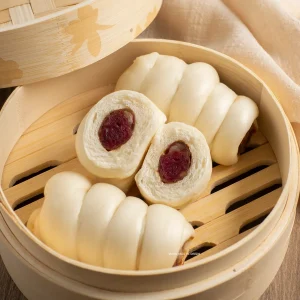
Juicy, succulent, sweet, and savory Chinese sausages wrapped in a light and fluffy Chinese steamed bun. These steamed Chinese sausage buns are the ultimate comfort food!

What Are Steamed Chinese Sausage Buns
Steamed Chinese sausage buns, also known as lap cheong bao (臘腸包) or 臘腸卷 in Cantonese, are a popular steamed bun often served at dim sum restaurants and Chinese bakeries.
A Chinese sausage called lap cheong (臘腸) is wrapped in a soft and light mantou (Chinese steamed bao bun) dough and then steamed over a steamer on high heat to create this delicious sweet and savory bun.
The filling sometimes may or may not contain sauce; however, in my recipe, I find adding in a sauce to the Chinese sausages elevates the flavor profile of these buns and makes them that much more tasty.
Nowadays, fewer and fewer places seem to be selling these buns for whatever reason, and you might struggle even to find a place selling them in your neck of the woods.
But don’t worry, I’ve got you covered!
Once you learn my steamed Chinese sausage bun recipe, you’ll be able to make your own lap cheong steamed buns whenever you crave them.
Let’s have a look at what ingredients you’ll need for this lap cheong bao recipe.
Steamed Chinese Sausage Bun Ingredient Notes


Dough
Cake flour: Used to make our steamed buns very soft and delicate. Cake flour has a softer texture compared to all-purpose flour and bread flour.
Instant yeast: Helps our buns rise and proof.
Baking powder: Helps our steamed buns rise and gives our buns a light, fluffy texture.
Lard: Adds extra flavor and makes our steamed buns softer.
White Granulated Sugar: Used to sweeten our buns.
Filling and Sauce
Chinese sausage: Our main filling ingredient. You can use regular Chinese sausage or Chinese liver sausages if you prefer.

Oyster Sauce: Adds a bit of sweetness and savory umami flavor to our sauce.
White Granulated Sugar: Sweetens up our sauce to balance out the saltiness from the soy sauce and oyster sauce.
Dark Soy Sauce: Used to color and darken our sauce. It also adds a bit of flavor to the sauce.
Water: Used for making our cornstarch slurry and the sauce.
Chinese Rose Cooking Wine: Adds a touch of fragrance to our sauce.

Gelatine: Helps our sauce bind better to our Chinese sausages.
Cornstarch: Used to thicken our sauce.
Substitutions
- Chinese sausage: You can substitute Chinese sausage with Chinese liver sausage.
- Cake flour: You can substitute it with all-purpose flour if you want; however, it won’t be nearly as soft and delicious as using cake flour.
- White granulated sugar: You can substitute it with brown sugar; however, it may make your buns darker or more brownish.
- Instant yeast: You can use dry active yeast. Make sure to activate the yeast prior to use.
- Chinese rose cooking wine: Just leave it out if you don’t have any.
- Cornstarch: Tapioca or potato starch can be used as a substitute for cornstarch.
- Milk: You can substitute it with a plant-based milk or just use water.
How to Make Steamed Chinese Sausage Buns
Making the Sauce
- In a small saucepan, add in your oyster sauce, sugar, water, gelatine powder, and dark soy sauce. Mix everything well together.
- Heat up the pot over a stovetop on medium heat until the sugar has fully melted and the sauce comes to a simmer.

- Now, create a cornstarch slurry by combining the cornstarch with two tablespoons of water. Mix everything well together.
- Now reduce the heat on the stovetop to low, and while stirring the sauce, slowly pour in the cornstarch slurry. Mix everything well together.

- Now turn the heat up to medium-high heat while constantly stirring the sauce.
- Once the sauce thickens up and you start to see it boil with bubbles. Turn off the stove and remove the saucepan from the stove.

- Transfer the sauce to a small bowl, set it aside to let it cool down. Once the sauce has cooled down, cover it with some plastic wrap and place it in the fridge to let the sauce solidify. You can also make the sauce the night before and leave it in the fridge so that it’s ready to use the next day.


Making the Dough
- In a stand mixer mixing bowl, add in your flour, sugar, instant yeast, egg white, lard, and baking powder. Give the mixing bowl a quick mix with the stand mixer, and then slowly add in your warm milk while mixing the dough.


- Knead the dough on low speed for 11 minutes and then transfer it to your countertop.


- Now, sprinkle some flour onto your countertop and remove the dough from the stand mixer.
- Sprinkle a little flour on top of the dough and knead the dough for another 30 seconds to a minute by folding the dough inwards toward the center and kneading the dough with your palms. If you find the dough very sticky and difficult to work with, sprinkle a little more flour onto the dough, but don’t add too much! Also, using a dough scraper makes it easier to knead the dough.


- After kneading the dough, shape the dough into a rectangular shape and then cover it with some plastic wrap to prevent it from drying out. Let the dough rest for 10 minutes.

Making the Filling
- Once your sauce has chilled and solidified, remove it from the fridge.
- Now, take your Chinese sausages and cut them in half.

- In a bowl, scoop out about 1.5-2 tablespoons of the sauce and then mash the sauce so that it is evenly spread out in the bowl. Now add in your Chinese sausages. Mix everything well together so that the Chinese sausages are coated with the sauce.


- Cover the bowl with some plastic wrap and then place everything in the fridge again until you’re ready to add the filling to the buns.
Making the Buns
- After 10 minutes have passed, remove the dough from the plastic wrap and weigh out the dough. Now divide the dough into 10 pieces, and sprinkle a little flour on top and cover the dough.
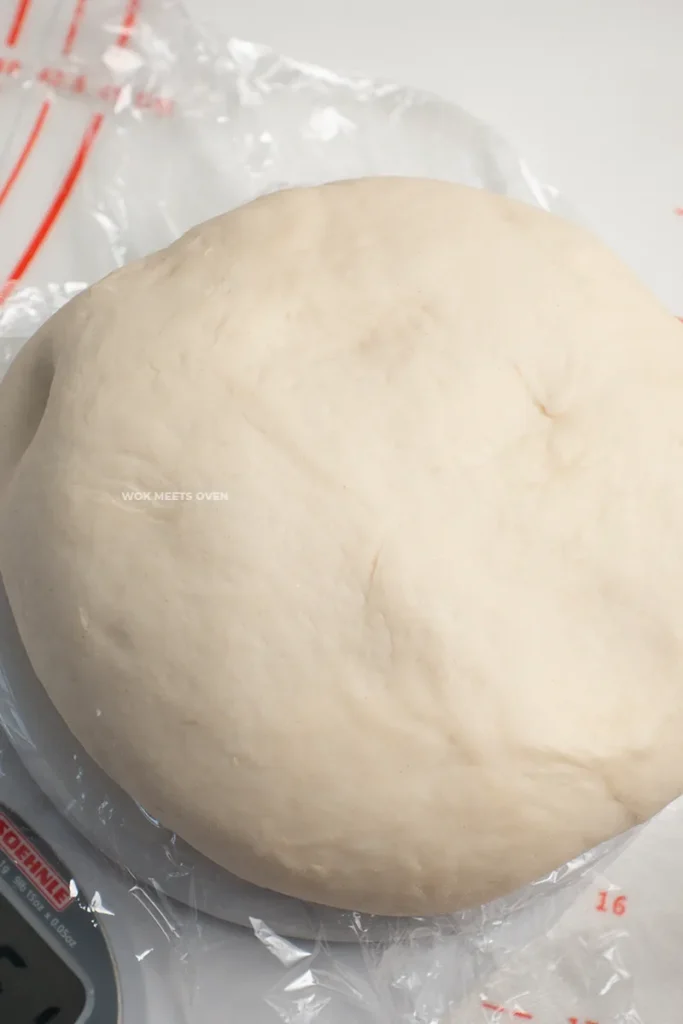

- Sprinkle a little bit of flour on your countertop and then grab each piece of the dough and roll it out slightly. Cover the dough and set them aside.


- Now take 1 piece of the dough and roll it out into a long strip about 3-3.5 times the size of the cut Chinese sausage. Repeat this for the rest of the pieces.


- Then take out your Chinese sausage filling. Grab 1 strip of the dough and place the top of the strip of dough behind the Chinese sausage, and using your opposite hand, press down and hold the piece of dough using your index finger. Now, loosely wrap the dough around the Chinese sausage, starting with the spot where your index finger is pressing down into the dough.


- Continue wrapping the dough around the Chinese sausage until you get between 4-5 circles around the Chinese sausage.


- Once you get to the end, tuck the dough underneath the circle. If the strip is too long, then you can use some scissors to cut it shorter.

- Place the buns onto a piece of parchment paper. If you get any sauce onto your buns, then I recommend putting that side facing down to cover the sauce. It also makes it easier to stick to the parchment paper.

- Repeat these steps for the rest of the dough.
- Once done, place all of the buns onto a steaming rack and cover them with some plastic wrap or a towel.

- Now take all of the buns and place them in a warm environment and let the buns proof for about 30 minutes.
- While your buns are proofing, get a steamer or wok ready with some water and heat up the water about 10 minutes before your buns are done proofing.
- At the end of 30 minutes, press down slightly onto the buns with your finger and see if there is an indentation on the buns. The spot where you pressed down on the buns should stay there and not bounce back or do so very slowly. If there is an indentation, then you’re ready to steam your buns. The buns should not double in size. If it proofs for too long, then you’re sausages will not be visible after steaming!


- Once your water is boiling and you can see a lot of steam coming out from your steamer or wok, place the buns into the steamer or wok, cover the buns with a lid, and steam the buns on high heat for about 10 minutes.

- Once the buns are done steaming, turn off the stove and slightly open the lid so that the edges are exposed, and leave the buns in the steamer or wok for an additional 5 minutes. Make sure that you do not fully open the lid immediately after the buns are done steaming, otherwise they may start to deflate and shrink!

- Once 5 minutes have passed, remove the buns from the steamer and serve the buns while still hot.


Tips
- Allow the sauce to fully cool down and solidify in the fridge before using it. This will make the sauce easier to stick to the Chinese sausages when you’re mixing the two together.
- Work fast while wrapping the dough over the Chinese sausages, as the dough will continue to proof and grow in size, giving you less and less room to wrap around the Chinese sausages.
- Use scissors to cut off any excess dough after you are finished wrapping the dough around the Chinese sausages.
- Don’t immediately open the lid after the lap cheong buns are done steaming, as this can cause the buns to deflate and shrink. Instead, open a tiny opening on the side and allow the temperature to slowly go down.
- To minimize water dripping onto your buns after steaming, open the lid at an angle to allow the water to drip down one side. You can also steam the buns with a towel wrapped around the lid.
Common Mistakes Beginners Make
- Rolling out the dough too long leads to excess dough hanging out.
- Opening the lid too soon after the buns are done steaming causes the buns to shrink and deflate.
- Not allowing the sauce to solidify before using makes the sauce difficult to stick to the Chinese sausages.
How to Store Steamed Chinese Sausage Buns
The buns can be stored in an airtight container for up to 5 days. Likewise, they can also be frozen in an airtight container for up to a month.
How to Reheat Chinese Steamed Sausage Buns
You can either reheat the buns in the microwave until they are warm or place them in a steamer and steam the buns on medium heat until they are nice and soft.
Recipes That Go Well With Chinese Steamed Sausage Buns
You may want to consider combining these Chinese steamed buns with some Chinese desserts like my Chinese steamed egg pudding recipe or my taro sago (tapioca) with coconut milk dessert.
Frequently Asked Questions (FAQs)
Why Did My Buns Deflate and Shrink?
The sudden temperature change as soon as you open the lid of the steamer causes the buns to deflate and shrink.
Do not immediately open the lid after the buns are done steaming.
Instead, open a small opening on the side and allow the temperature to slowly go down.
How Do I Prevent Water From Dripping Down Onto My Steamed Buns?
There are two remedies for this:
- Wrap the lid with a cloth and steam it with the cloth.
- When opening the lid, tilt the lid to the side so that all of the water drips to the side of the lid.
Can I Cook My Chinese Sausages Before Wrapping Them?
You can pre-steam the Chinese sausages prior to wrapping them if you want to reduce the fat content.
However, I find the extra fat content makes the buns extra juicy when you bite into the Chinese sausages.
Why Is My Dough Not Rising When Proofing the Dough?
Do not be alarmed!
This is perfectly fine and normal.
We don’t want our buns to be rising too much, as it will end up covering up all of the Chinese sausages when we’re steaming them.
Instead, you should test and see whether or not indentations are present in the dough after proofing by pressing your finger gently into the dough and seeing if the indentation stays or bounces back quickly.
If it stays, then your buns are ready to be steamed.
Can I Substitute the Chinese Sausages With Something Else?
I suppose hot dogs and regular sausages might work if you don’t have any Chinese sausages around.
I’m Lactose Intolerant. Can I Substitute the Milk With Something Else?
You can use a plant-based milk or just plain water.
Other Recipes You’ll Love
- Chinese Hot Dog Buns
- Extra Soft Chinese Sausage Bread
- Easy Hong Kong Style Egg Tarts
- Chinese Coconut Cream Buns
You can pin this image

Steamed Chinese Sausage Buns
Equipment
- 1 Steamer or Wok
- 1 Saucepan
Ingredients
Dough
- 156 g Cake flour
- 88 ml Milk 1%, 2%, whole
- 14 g Egg whites
- 4 g Instant yeast
- 7 g Baking powder
- 40 g White granulated sugar
- 10 g Lard
Filling and Sauce
- 5 Pieces Chinese Sausages
- 1 Tablespoon Oyster sauce
- 1 Tablespoon White granulated sugar
- 80 ml Water
- 1 teaspoon Dark soy sauce
- 1/2 teaspoon Chinese rose cooking wine
- 4 g Gelatine
Cornstarch slurry
- 1 Tablespoon Cornstarch
- 2 Tablespoons Water
Instructions
Making the Sauce
- In a small saucepan, add in your oyster sauce, sugar, water, gelatine powder, and dark soy sauce. Mix everything well together.
- Heat up the pot over a stovetop on medium heat until the sugar has fully melted and the sauce comes to a simmer.
- Now, create a cornstarch slurry by combining the cornstarch with two tablespoons of water. Mix everything well together.
- Now reduce the heat on the stovetop to low, and while stirring the sauce, slowly pour in the cornstarch slurry. Mix everything well together.
- Now turn the heat up to medium-high heat while constantly stirring the sauce.
- Once the sauce thickens up and you start to see it boil with bubbles. Turn off the stove and remove the saucepan from the stove.
- Transfer the sauce to a small bowl, set it aside to let it cool down. Once the sauce has cooled down, cover it with some plastic wrap and place it in the fridge to let the sauce solidify. You can also make the sauce the night before and leave it in the fridge so that it’s ready to use the next day.
Making the Dough
- In a stand mixer mixing bowl, add in your flour, sugar, instant yeast, egg white, lard, and baking powder. Give the mixing bowl a quick mix with the stand mixer, and then slowly add in your warm milk while mixing the dough.
- Knead the dough on low speed for 11 minutes and then transfer it to your countertop.
- Now, sprinkle some flour onto your countertop and remove the dough from the stand mixer.
- Sprinkle a little flour on top of the dough and knead the dough for another 30 seconds to a minute by folding the dough inwards toward the center and kneading the dough with your palms. If you find the dough very sticky and difficult to work with, sprinkle a little more flour onto the dough, but don’t add too much! Also, using a dough scraper makes it easier to knead the dough.
- After kneading the dough, shape the dough into a rectangular shape and then cover it with some plastic wrap to prevent it from drying out. Let the dough rest for 10 minutes.
Making the Filling
- Once your sauce has chilled and solidified, remove it from the fridge.
- Now, take your Chinese sausages and cut them in half.
- In a bowl, scoop out about 1.5-2 tablespoons of the sauce and then mash the sauce so that it is evenly spread out in the bowl. Now add in your Chinese sausages. Mix everything well together so that the Chinese sausages are coated with the sauce.
- Cover the bowl with some plastic wrap and then place everything in the fridge again until you’re ready to add the filling to the buns.
Making the Buns
- After 10 minutes have passed, remove the dough from the plastic wrap and weigh out the dough. Now divide the dough into 10 pieces, and sprinkle a little flour on top and cover the dough.
- Sprinkle a little bit of flour on your countertop and then grab each piece of the dough and roll it out slightly. Cover the dough and set them aside.
- Now take 1 piece of the dough and roll it out into a long strip about 3-3.5 times the size of the cut Chinese sausage. Repeat this for the rest of the pieces.
- Then take out your Chinese sausage filling. Grab 1 strip of the dough and place the top of the strip of dough behind the Chinese sausage, and using your opposite hand, press down and hold the piece of dough using your index finger. Now, loosely wrap the dough around the Chinese sausage, starting with the spot where your index finger is pressing down into the dough.
- Continue wrapping the dough around the Chinese sausage until you get between 4-5 circles around the Chinese sausage.
- Once you get to the end, tuck the dough underneath the circle. If the strip is too long, then you can use some scissors to cut it shorter.
- Place the buns onto a piece of parchment paper. If you get any sauce onto your buns, then I recommend putting that side facing down to cover the sauce. It also makes it easier to stick to the parchment paper.
- Repeat these steps for the rest of the dough.
- Once done, place all of the buns onto a steaming rack and cover them with some plastic wrap or a towel.
- Now take all of the buns and place them in a warm environment and let the buns proof for about 30 minutes.
- While your buns are proofing, get a steamer or wok ready with some water and heat up the water about 10 minutes before your buns are done proofing.
- At the end of 30 minutes, press down slightly onto the buns with your finger and see if there is an indentation on the buns. The spot where you pressed down on the buns should stay there and not bounce back or do so very slowly. If there is an indentation, then you’re ready to steam your buns. The buns should not double in size. If it proofs for too long, then you’re sausages will not be visible after steaming!
- Once your water is boiling and you can see a lot of steam coming out from your steamer or wok, place the buns into the steamer or wok, cover the buns with a lid, and steam the buns on high heat for about 10 minutes.
- Once the buns are done steaming, turn off the stove and slightly open the lid so that the edges are exposed, and leave the buns in the steamer or wok for an additional 5 minutes. Make sure that you do not fully open the lid immediately after the buns are done steaming, otherwise they may start to deflate and shrink!
- Once 5 minutes have passed, remove the buns from the steamer and serve the buns while still hot.